
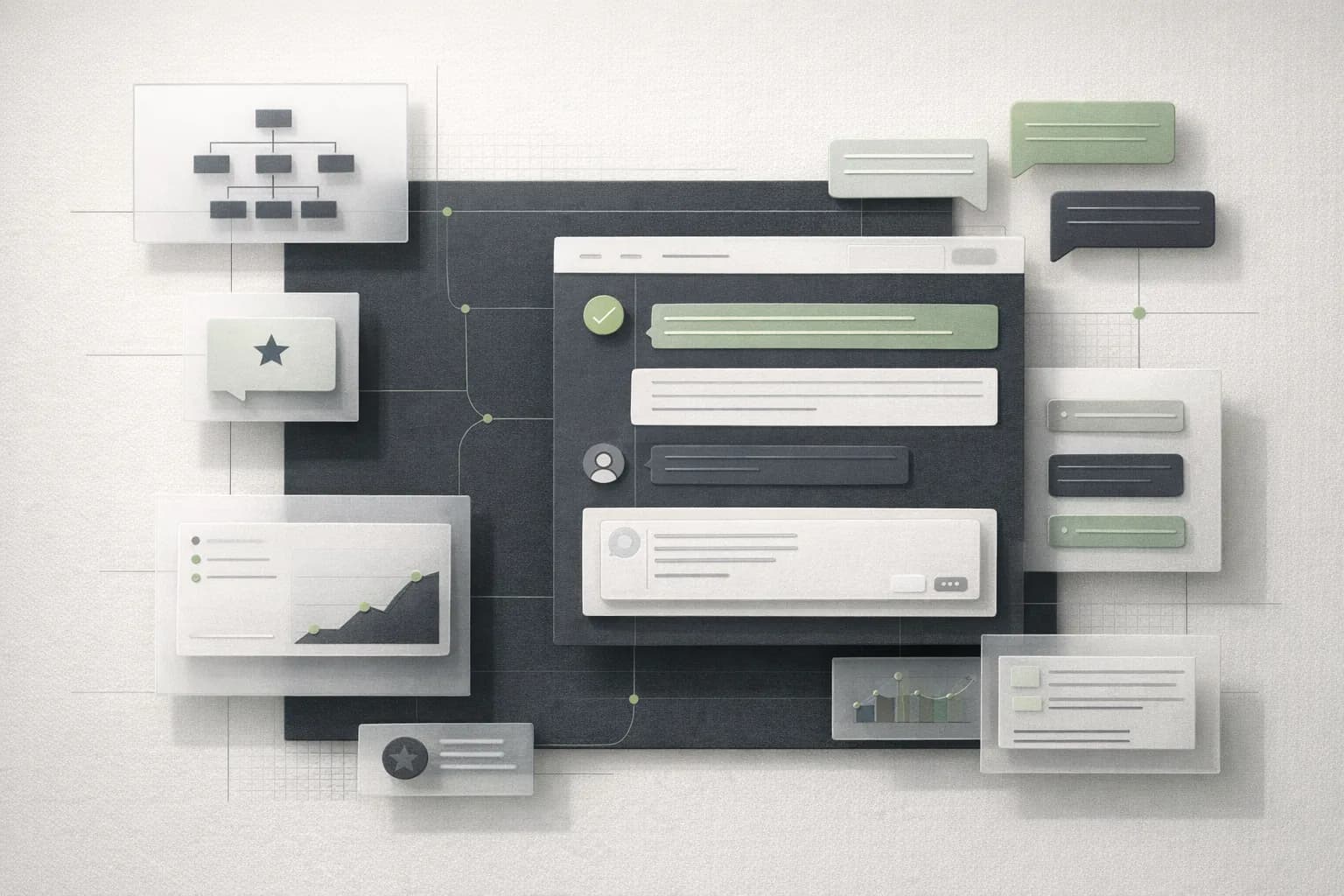
Custom GPT-style tools work best when they are shaped around actual business jobs: drafting, answering, sorting, summarizing, and organizing knowledge.
The most useful systems are the ones that solve a real operational problem instead of adding another distraction.
For a small service business, AI earns its keep when it helps with repeat decisions. It can draft customer replies, summarize intake details, sort requests, prepare estimates, and make internal notes easier to search.
The weak version is a generic chatbot dropped onto a site with no business context. The stronger version is trained around the questions customers actually ask and the way the owner actually wants to respond.
AI should make the human touch easier to deliver, not replace it. The measure is whether it saves time while keeping the business voice intact.